Why Authors Need Websites
I’m an author with a day job. My job, in this case, is building websites. A lot of my clients are small businesses, often sole traders, and the one thing they tell me first is: I need a website. I need people to be able to find me online. And so I build them one – even if it’s one page, it gives them online presence and allows people to find/contact/understand who they are.
Do I need a website?
Yes. If you have books to sell, list them there. Even if you just want links out to where people can buy your books, that’s good too. Control the narrative. Tell people what you want them to know.
What should I call it?
Domain names are important intellectual property in the world. It’s where you can own your author name and presence online, even if you just buy the domain and keep it on ice.
I recommend purchasing your name and the variations of it that you want to use. For me, that was carogeelen. For domain suffix, if you can get .com, get it! The default for people typing (no matter the country) is .com, so even if it’s not your primary domain, you can route users to your domain using that if they search for it.
I’d also recommend purchasing your country domain (in my case, .co.nz). Note that this will cost you somewhere between $30 to $60 per domain per year, but it’s worth it.
How much does a website cost?
There are lots of website platforms out there, and they all have different costs. A good WordPress hosting package is anywhere between $150 – $300 a year. If you want cheaper, go for it!
If you’re not actively selling products online, cheap is good. If you are, go for the slightly more expensive version. Some platforms are monthly cost, but ALWAYS check what those costs give you. Sometimes it’s a good thing, like automatic backups and updates, but sometimes they’ll only pay for the basics and the rest is up to you. IngramSpark have a good author website system, and their cheapest plan is $6.99 USD per month, so that’s pretty good for pricing.
If you’re selling lots of things, for example Books and Merchandise, Shopify is very good at this, as is Squarespace. WordPress does this too, with WooCommerce plugin, but it’s less intuitive to set up.
Can I do this for free?
Yes. There are some website platforms that offer a free service, but you’ll usually have watermarks from them, or adverts or buttons from their service you can’t get rid of, or a super restricted page template/layout. If you are budget-limited, it is a good start.
However, there are also plenty of author page systems out there. For example, if your books are on Amazon, Amazon offers a free author page you can create, and Goodreads too, and if you advertise on Bookbub, there are some limited things you can add to their author pages.
What should I put on my website?
Keep it simple. The website is for people to find you. You want to direct them to your books.
- Highlight your current books
- Promo your next release
- If you have a series, I cannot stress this enough, make a page dedicated to that series!
- About page (use your blurb from your books)
- Social media links
- Newsletter sign up (easy marketing for new releases)
- Blog
Do I need to blog?
You don’t have to. You certainly don’t have to blog frequently! There are many authors who use the blog area to post updates about where they’re going to be next, eg book fairs, and news or articles about their books, and they only do this when they have something to say.
A blog can help to drive people to your website. It serves two purposes:
- Updates, even if once a month or once every few months, forces search engines to refresh their indexes and pushes you up the search results, because you are more frequently updating the site.
- If you post a blog, you can link to it on social media. People will click on that and visit your website, even if they don’t read the blog, and they’re more likely to view your books and your site that way. If more people visit the site, you’re also going up in search rankings.
I don’t have an author logo!
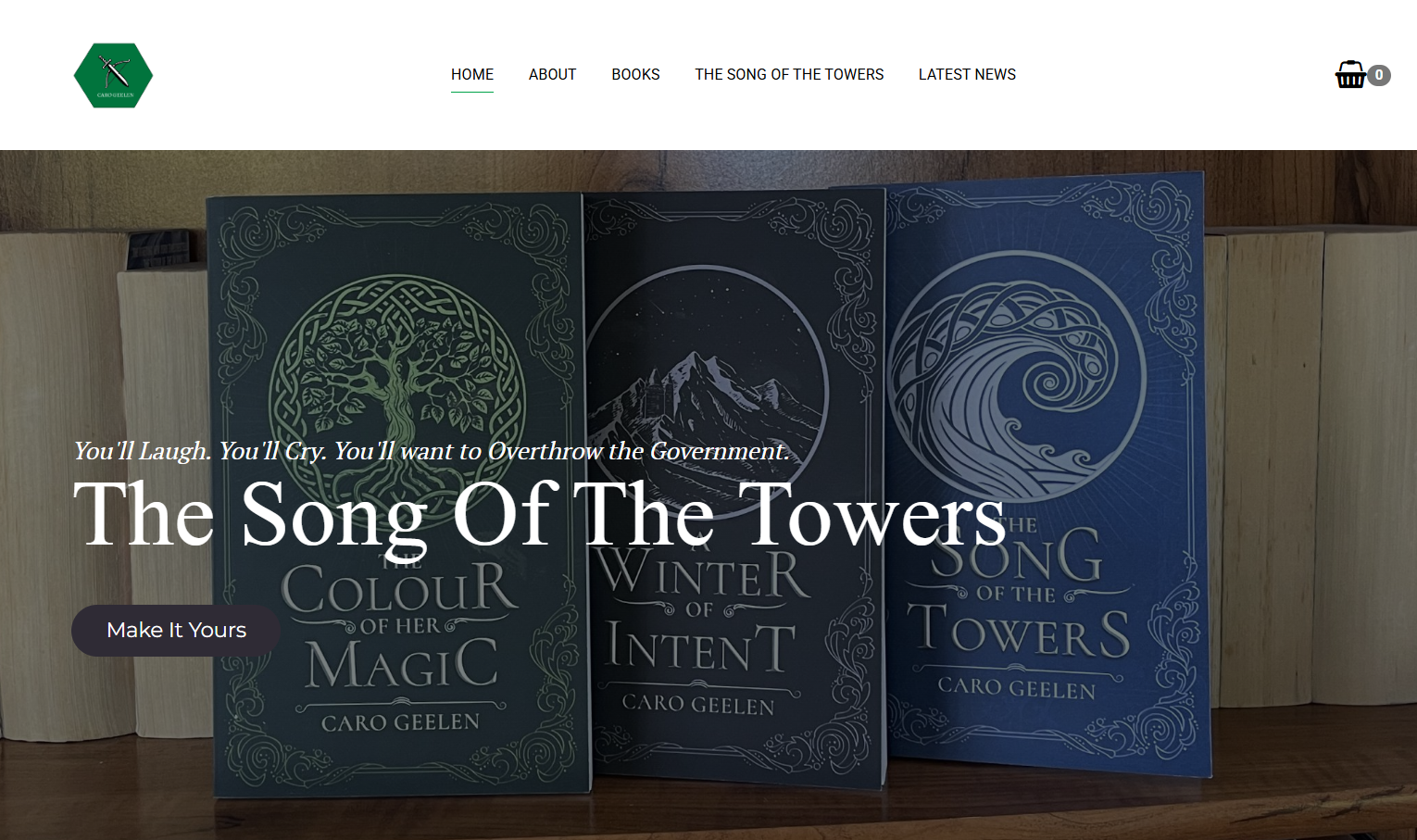
It’s not super necessary to have an author logo that’s fancy unless you already have your branding in mind. Mine is just my name on a hexagon which I whipped up in Canva. Most websites have a logo area, but you can put anything you want in there. I recommend finding a colour scheme you like, and even just a shape with your name can be a good base for a brand. Remember you can always change it if you don’t like it! Websites are living documents.
How do I get people to find me?
If they’re looking for your name on search engines, they’ll find you. But you can tweak the system in your favour by doing the following:
- Make sure each web-page has a meta description and/or keywords that you think people will search for you under. You can change these later if you feel they’re not working.
- Link your website with Google Analytics services however you can. Most websites have a quick way to do this, but some require plugins.
- Every image you upload to your website has a field we call “alt text”. This is a website’s secret superpower to add in those keywords you want! Make sure every image you upload has alt text added, even something like “fantasy book”
- Share, Share, Share! Add your website to email footers. Add your website to all your social channels. Add your website to social posts. If you have a mailing list, ALWAYS have a link back to your website. The more you share, the more people will get to know you, and they’ll find your website.
But I’m not a designer…
Don’t worry! There are thousands of website templates out there you can customise to suit. Go looking at other author websites. Note down the parts you liked, and the parts you didn’t. Yes, some of the websites are controlled by marketers, or publishing houses, but that doesn’t mean they don’t work. Find out what you think suits you, and go and build it.
Happy websiting!