Being An Author On Social Media
I work in marketing and spend my days advising others how to show up online, but when it comes to my own social media presence as an author, I have a bit of a love-hate relationship going on.
Writing books doesn’t always lend itself to easy sharing online. Most of the work happens out of sight, sitting behind a laptop screen or scribbling in a notebook, thinking, rereading, deleting and starting again. It is slow, repetitive and largely unvisual, and applying the same promotional thinking to my identity as an author can sometimes feel like dragging my work into my hobby.
Talking to other writers, there seems to be a collective struggle to connect social media meaningfully to what they are doing day to day, especially in a space that rewards constant output. Trends change faster than we can keep up with, and especially for the introverts out there, reacting publicly to everything the internet decides is important can feel unnatural. On top of that, different platforms demanded different versions of the same thing, which leaves many writers focusing on how to share their work rather than the writing itself.
Despite this, social media plays a genuinely important role in how books and authors exist in the world now. Recognising that, and finding ways to engage with it that feel sustainable and purposeful, has become part of my writing life.
Why social media matters, even when it feels uncomfortable
The reality, of course, is that social media matters. It helps books get discovered, increases visibility and plays a real role in how authors are found by readers, teachers, librarians, booksellers and event organisers.
What’s easy to miss, particularly when conversations focus heavily on sales, is that it’s also where community lives. Writing can be isolating, and the industry can feel opaque and hierarchical from the outside. Social media has been one of the main ways I have connected with other authors, understood how different parts of the industry actually work, and felt less alone during the long stretches where very little appears to be happening.
That sense of community also creates an ecosystem. Readers don’t just connect with books; they connect with people, conversations and shared interests, and social media makes these connections possible at scale.
The day I went viral
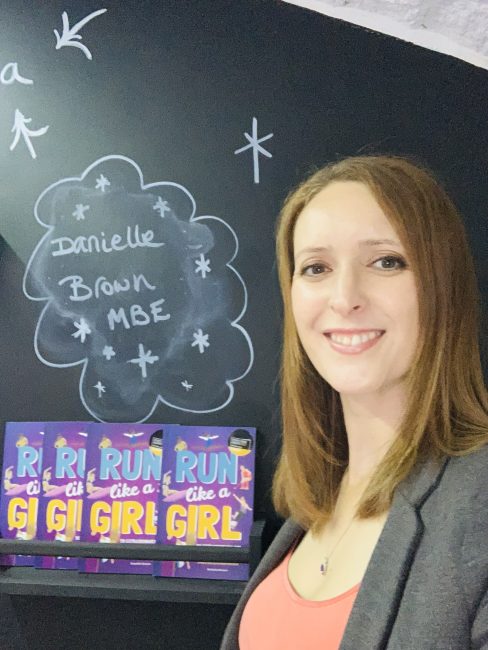
One of the clearest examples I have experienced of social media’s impact came from a moment I did not plan at all. I took a photo of the non-fiction sports shelves in a bookshop and, in a moment of frustration, shared how fed up I was with not seeing books about girls in sport. I explained why representation mattered and that, in this day and age, this just wasn’t good enough.
The post gained traction very quickly. Some people weren’t kind when they pointed out the two biographies of women footballers I’d missed, but the conversation it sparked mattered. It highlighted a real imbalance and reached people far beyond my existing network, and best of all, it contributed to wider discussions between my publishers and the bookshop. This change was powerful to see – and yes, I did go back in and post about their more inclusive shelf!
However, going viral should never be the goal. Viral moments can amplify a message, but they are not a strategy because they are unpredictable and largely outside your control. What creates impact over time is consistency. Showing up regularly, contributing thoughtfully and engaging in ongoing conversations builds trust and visibility in a way that a single spike of attention never can. Most of the meaningful outcomes I have seen from social media have come but from steady, day-to-day engagement that compounds quietly over time rather than sudden bursts of attention.
What has made social media work better for me
The biggest shift for me came from treating social media less as a broadcast channel and more as a place for participation. Posting matters, but interaction matters more. Commenting thoughtfully on other people’s work, ideas and achievements has been one of the most effective ways to build genuine connection, and it requires far less time and emotional energy than trying to constantly create new content.
As a rough rule, aiming for one meaningful comment a day has been far more valuable than sporadic bursts of posting followed by long silences. Commenting keeps you visible without being performative, and it places you in conversation rather than competition. It also reflects how relationships actually form in real life, through repeated, low-pressure points of contact rather than big announcements.
Another important element has been aligning what I share online with what I am already doing offline. Instead of trying to manufacture content, I focus on translating existing work, conversations and observations into a social context. That might be a reflection on a school visit, a response to something I have read, or a question that emerged while researching. The content already exists; social media simply becomes the place where it is shared.
Finally, understanding that platforms, trends and algorithms will always change helps to remove some of the pressure. You cannot optimise your way out of that reality, but you can build a presence rooted in consistency, clarity and genuine engagement.
Finding sustainable ways to show up
Social media is not easy for authors, and pretending otherwise doesn’t help anyone. It demands time, energy and a willingness to be visible in ways that can feel uncomfortable, particularly when the work itself is so often so inward-facing.
But when it is approached as a space for connection rather than constant self-promotion, it becomes more manageable and, in many cases, genuinely worthwhile. It is where community forms, where conversations happen and where books begin to exist in the world long after they are read.
Seen this way, social media stops being a distraction from writing and becomes one of the places where writing lives.
Dani Brown